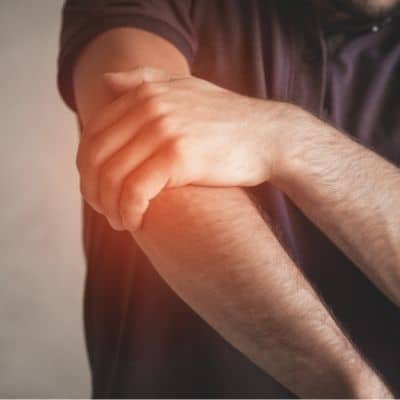
 Are you experiencing pain in your wrist and forearm that radiates to your elbow? If the answer is yes, you may be experiencing lateral epicondylitis or tennis elbow, as it’s more commonly known. This condition results from a strain of the tendons in the wrist and forearm. As the name suggests, it is a common injury for tennis players due to the rapid flexion of their arms when swinging a racket and striking the ball. Anyone that engages in regular activities which require repetitive movement of the wrist and forearm is at risk for tennis elbow.
Who is at Risk?
Professions that work extensively with their hands are at the highest risk of developing tennis elbow. These professions include plumbers, electricians, painters, insulators, carpenters, cooks, butchers and janitors. Certain hobbies can also increase your risk of tennis elbow. These include tennis players, golfers, certain musicians and weight-lifters.
Symptoms
Patients typically experience pain that radiates from their elbow to their wrist. Pain is worse with activity and generally subsides with rest. The patient should suspect tennis elbow only if they have not experienced any blunt trauma to any area of the affected arm.
Treatment
Self-care is encouraged when experiencing symptoms of tennis elbow. The best treatment for tennis elbow is rest. Upper body exercises should be avoided for two to four weeks, though it may take several months for moderate to severe cases to heal completely. Nonsteroidal analgesics (NSAIDs) are recommended as they may reduce any swelling or irritation of the tendons. Applying an ice pack to the forearm and/or elbow as needed may also help.
When to See the Doctor
You should see your doctor if the pain does not subside with rest and/or does not improve with NSAIDs. You should also see your doctor if bruising is present or your arm has an obvious deformity, as this may be an indication of a fracture. You should expect your doctor to examine the mobility of your arm and order an x-ray to check for a fracture.
If you have elbow pain and want to learn more about its causes and treatments, please contact our experts at Hampton Roads Orthopaedics & Sports Medicine at 757-873-1554.