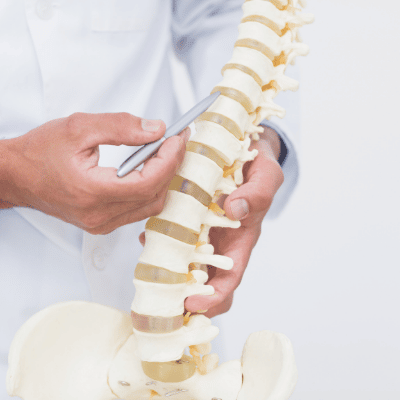
Any painful back condition that worsens as you move can be challenging to diagnose because most tests will examine you in a non-moving state. One such back condition is called spinal instability. This condition happens when two vertebrae loosen up to the point that too much motion occurs between them. This excess motion in the spine often creates pain and decreases the patient’s ability to move.
 Symptoms
The symptoms of spinal instability may include:
- back pain
- neck pain
- muscle spasms
- the feeling of something catching and holding in your back
- pain during movement, such as rising from a sitting position
Causes
Spinal instability normally results from degenerating vertebrae, which happens with age. As the vertebrae age and wear thin, the supporting ligaments also become brittle and wear out. The ligaments no longer hold the vertebrae in place as they are supposed to, and excess movement results. When the vertebrae have room to move and slip out of place, they can cause pain by irritating or pinching nerves. Aside from hitting nerves, instability in one part of the spine also puts a lot of stress on the entire spinal structure, which, over time, can also create pain.
Spinal instability can also result from injury, such as a fractured vertebra.
Diagnosis
The best way to diagnose conditions of the spine is with an X-ray. These spinal X-rays will usually be taken in a standing position or in a position where you are bending your spine.
Treatments
Non-surgical treatments may include:
- pain medication
- rest
- exercise for core strengthening
- physical therapy
- massage therapy
- spinal injections to relieve pain
If these methods of pain relief do not work, then surgery may be considered. This surgery will usually involve the fusion (or joining) of one vertebra to another, thus eliminating the movement between them.
In most cases, patients treated for spinal instability can and do return to an active lifestyle.
If you are suffering from these symptoms or would like to know more about spinal instability and the various treatments offered, contact your HROSM orthopaedic specialist at (757) 873-1554 for further steps to take to address your issues. Our providers can help you find relief.