
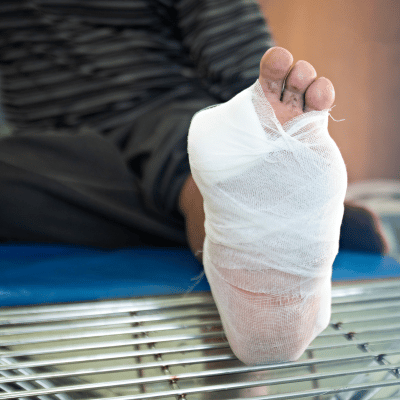
 Diabetic foot is a condition that occurs as a result of having diabetes. It can lead to several foot conditions, including foot ulcers, soft tissue damage and foot deformities. When injuries are left untreated, they can sometimes become serious and may even lead to amputation.
Preventive measures and podiatrist-managed foot care are key elements in treating diabetic foot successfully. Our patients are fortunate to have experienced foot and ankle specialists caring diligently for the complexities of neuropathy and poor circulation which necessitate clinical supervision and treatment.
Manage Your Diabetes: Follow these helpful guidelines for diabetes management to prevent certain foot conditions from developing:
- Maintain a balanced diet, a healthy weight and exercise regularly.
- Take medications/insulin as prescribed.
- Regulate your blood glucose, BP and cholesterol levels.
- Quit smoking! It negatively impacts blood circulation.
Daily Foot Care Routine: Because diabetic foot often causes nerve damage, numbness or loss of feeling in limbs, a person can remain unaware of an injury. Early detection and treatment helps keep more serious conditions from developing. That’s why following a daily foot care routine is so important!
- Check feet daily for nicks, scratches, cracked skin, calluses, blisters and ingrown toenails.
- Note any inflammation in your affected foot or feet, as well as changes in color, shape, or sensation.
- Wash feet in warm water with mild soap. Check temperature to avoid burning desensitized skin. Don’t soak feet, dry thoroughly, and apply a physician-approved moisturizer to heal cuts and cracks more quickly.
Blood Circulation: Poor blood circulation can cause nerve damage and numbness in feet, toes and limbs. High blood pressure, high cholesterol, obesity and smoking increase your risk of poor blood circulation to your feet.
To improve your circulation:
- Elevate feet when sitting.
- Wriggle toes and ankles several times throughout the day.
- Avoid crossing legs, especially for long periods.
Proper Footwear: Always wear socks and shoes to protect feet from injury. Make sure to wear well-fitting, closed-toe leather or canvas shoes. Use special wide-width shoes for foot deformities. Break shoes in slowly. Always check for objects inside. Avoid sandals, straps or bare feet, even indoors. Wear well-insulated, fitted socks with soft elastic to protect against hot/cold temperatures.
If you or someone you love needs attentive, effective treatment for diabetic feet or other foot and ankle issues, please contact us.