Every year, three to five million Americans suffer from chronic wounds caused by diabetes, spider or insect bites, burns, arterial ulcers, venous ulcers, post-operative infections, problems with your immune system, poor circulation and other conditions. Sometimes a wound can occur from an everyday activity like falling down, cutting yourself or getting burnt. When these injuries don’t heal and disappear on their own, you can be left with chronic wounds that never improve. Once a wound persists for more than a month with minimal improvement, it’s officially considered a chronic wound that requires specific medical attention.
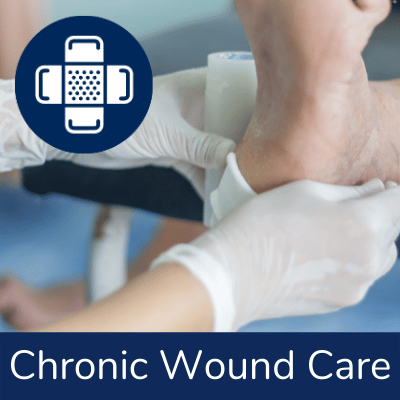 Common Types of Chronic Wounds
Chronic wounds occur can occur anywhere on your body and be of any type, but the most common chronic wounds are:
- Diabetic Ulcers – Diabetic foot ulcers begin as common cuts, blisters and scrapes, but they gradually deteriorate into deep wounds with severe infection.
- Post-Surgical Wounds – Surgical incisions are vulnerable to bacteria and infection and if they don’t heal properly, a chronic wound may develop.
- Traumatic Ulcers – Severe trauma or injury to the body has the potential to result in damage that can’t be reversed using the body’s natural healing functions.
- Arterial Ulcers – These chronic wounds are round in shape and are caused by poor circulation through the legs and feet.
- Venous Ulcers – Due to abdominal vein function, common causes are damaged veins, blood clots, aging and obesity.
How Wounds Heal
There are four physiological stages of healing and if they fail to occur properly, a wound becomes “stuck” in the inflammatory phase and develops into a chronic wound. The four stages of healing are:
- Hemostasis – Occurs immediately after an injury and includes blood clotting to prevent excessive blood loss and create a scab that protects the underlying tissues from bacteria.
- Inflammation – Occurs after hemostasis when a surge of inflammation like redness, warmth, swelling, pain, and loss of function. Early inflammation means cells are working hard to stimulate healing.
- Proliferation – The wound regenerates with new tissue made of fresh, healthy collagen. New blood vessel networks are constructed to keep this new tissue fully nourished with oxygen and nutrients and the wound becomes smaller and less noticeable.
- Maturation – Conclusion of proper wound healing when the wound closes completely with new tissue.
Why Do Some Wounds Not Heal Properly
Many different physiologic and mechanical factors can interfere with the healing process, resulting in a chronic wound that fails to graduate from the inflammatory phase. Some of the most common issues known to impair the normal healing process include diabetes, immunodeficiency, trauma, and malnutrition. Chronic wounds are painful and dangerous. HROSM Wound Care Center can help you heal.
Our Wound Care Center
Our Wound Care Center of Hampton Roads Orthopaedics Spine & Sports Medicine is nationally recognized for successfully treating wounds that don’t heal with standard care. Our team works with you to evaluate your condition and create an individualized treatment plan that uses the most advanced approach to treatment. The goal is to keep you in your home and avoid hospitalization. This means we try to find non-invasive solutions for faster healing without side effects.
Our Wound Care Expert, Nelson G. Keller, DPM, FACFAS
Dr. Nelson G Keller graduated summa cum laude from the State University College at Buffalo with a degree in biology and received his podiatric medical degree in Cleveland, Ohio. Dr. Keller completed a three-year surgical residency with specialized training in diabetic wound care and limb salvage at the Greater Baltimore Medical Center, with rotations through Johns Hopkins Hospital.
With over 25 years of wound care experience, Dr. Keller provides care for various acute and chronic wounds. He specialized in both surgical and non-surgical treatments. His goal is to provide the care you need to stay out of the hospital and avoid surgery. Dr. Keller’s non-invasive, safe and effective treatments are used to relieve pain, reduce inflammation and promote wound healing and soft tissue repair.
Wound Care Treatments At HROSM Wound Care Center
- Application Of Cell and Tissue Products
- MLS Laser Therapy
- Skin Grafts
- Ultrasound Wound Therapy
- Wound VAC Therapy (Negative Pressure Wound Therapy)
Learn more about these treatments on our Wound Care page.
Let HROSM Help You Heal
If you are suffering from a wound that has not healed in the last 30 days, the Wound Care Center of Hampton Roads Orthopaedics Spine & Sports Medicine can help. Contact your HROSM orthopaedic specialist at (757) 873-1554 for further steps to take to address your issues. Our providers can help you find relief.