
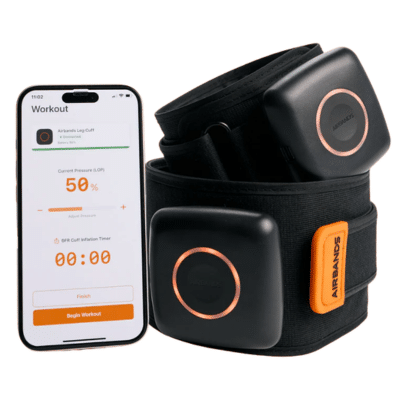
 At Hampton Roads Orthopaedics Spine & Sports Medicine (HROSM) in Hampton Roads, VA, innovation and evidence-based care guide everything we do. That’s why our Physical Therapy team is excited to introduce Blood Flow Restriction (BFR) Therapy using AirBands®. Patients often ask how Blood Flow Restriction Therapy works, and the answer lies in a powerful combination of science, safety and smart rehabilitation strategies designed to accelerate healing while minimizing strain on the body.
Understanding how BFR Therapy works can help patients feel confident about incorporating this advanced treatment into their recovery plan.
What Is Blood Flow Restriction Therapy?
Before diving deeper into how Blood Flow Restriction Therapy works, it’s important to understand what it is. Blood Flow Restriction Therapy involves placing a specialized medical cuff around the upper portion of an arm or leg during low-load exercise. The cuff partially restricts blood flow out of the limb while still allowing arterial blood to enter.
This controlled restriction creates a unique physiological response in the muscle. When patients learn how BFR Therapy works, they discover that it allows them to gain strength and muscle mass similar to heavy weight training, but while lifting only 20–30% of their typical load.
The Science Behind How Blood Flow Restriction Therapy Works
To fully explain how Blood Flow Restriction Therapy works, we need to look at what happens inside the muscle. When blood flow is partially restricted, oxygen levels in the muscle temporarily decrease. This creates metabolic stress and fatigue more quickly than traditional low-load exercise.
Because of this environment, the body responds as if it is performing high-intensity strength training. Understanding how BFR Therapy works means recognizing that the muscle recruits more fast-twitch fibers, increases growth hormone production and stimulates protein synthesis, all essential components of muscle hypertrophy and tissue healing.
In simple terms, how Blood Flow Restriction Therapy works is by “tricking” the body into working harder without placing excessive mechanical stress on joints or surgical repairs.
Why How Blood Flow Restriction Therapy Works Matters After Injury or Surgery
One of the biggest advantages of understanding how Blood Flow Restriction Therapy works is realizing why it is especially beneficial during rehabilitation. After orthopaedic surgery or injury, patients are often restricted from lifting heavy weights. However, muscle weakness and atrophy can develop quickly.
Because of how BFR Therapy works, patients can rebuild strength safely with lighter resistance. The reduced joint load protects healing tissues while still promoting meaningful strength gains. This makes BFR therapy an excellent option for individuals recovering from knee, shoulder, hip, or other orthopaedic procedures.
Patients who understand how Blood Flow Restriction Therapy works often feel reassured knowing they can progress faster without risking reinjury.
The Role of AirBands in How Blood Flow Restriction Therapy Works
At HROSM, our Physical Therapy team uses AirBands®, a leading BFR system designed for precision and safety. A key part of how BFR Therapy works is ensuring the correct amount of occlusion pressure is applied for each individual patient.
AirBands allow therapists to carefully calibrate pressure based on limb size and patient tolerance. This individualized approach is central to how Blood Flow Restriction Therapy works safely and effectively in a clinical setting. Each session is supervised by trained professionals who monitor patient comfort and response throughout the exercise program.
Who Can Benefit?
While many patients can benefit from learning how BFR Therapy works, it is not appropriate for everyone. Individuals with a history of cardiac conditions, blood clots, or certain medical comorbidities may not be candidates. Our team carefully screens every patient before beginning treatment.
For those who qualify, understanding how Blood Flow Restriction Therapy works opens the door to:
- Increased muscle hypertrophy with lower loads
- Improved soft tissue healing
- Reduced joint stress during strengthening
- Faster return to functional activities
- Enhanced recovery timelines
Athletes, post-surgical patients and individuals experiencing muscle atrophy from immobilization may all benefit from this advanced therapy.
What to Expect During Treatment
When patients experience firsthand how BFR therapy works, they are often surprised. During a session, the AirBands cuff is placed on the limb and inflated to a prescribed pressure. Patients then perform guided exercises using light resistance.
Despite the low load, muscles fatigue quickly—a key indicator of how Blood Flow Restriction Therapy works to stimulate adaptation, increase muscle fiber recruitment and promote strength gains similar to high-intensity training while using significantly lighter resistance. Many patients describe the workout as challenging but manageable, with noticeable improvements in strength over time.
A Smarter Approach to Rehabilitation
At Hampton Roads Orthopaedics Spine & Sports Medicine in Hampton Roads, VA, we are proud to offer innovative services backed by research and clinical results. When patients understand how BFR therapy works, they see why it has become such a valuable tool in modern rehabilitation.
By combining advanced technology with personalized physical therapy care, HROSM helps patients recover more efficiently while protecting healing tissues. If you are recovering from an injury or surgery and want to learn more about how Blood Flow Restriction Therapy works, our Physical Therapy team is here to help guide you every step of the way.
Request your appointment at HROSM today to find out if Blood Flow Restriction Therapy is right for you and take the next step toward stronger, safer recovery.